Alright, the few last comments made me realise i left out some of the lore i imagined for this character, mostly regarding themes and design choices, so i'll try to keep it concised in this reply.
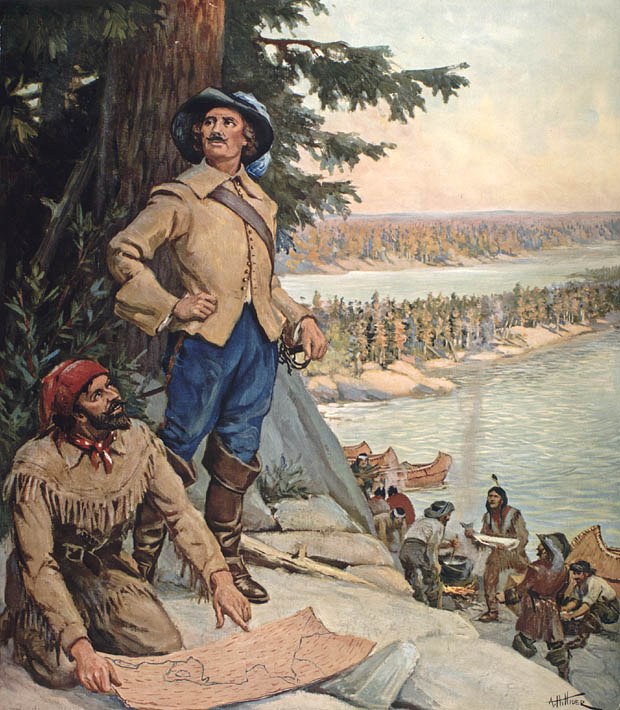
It goes without saying that i did a bunch of research on French-Canadian culture, folklore, myths and legends and basically i'll describe every design decision i made and what i based them on.
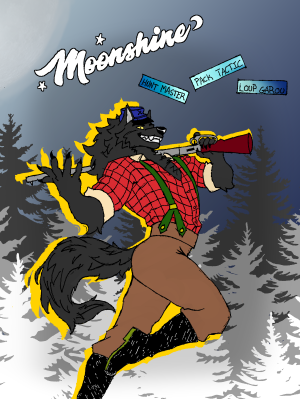
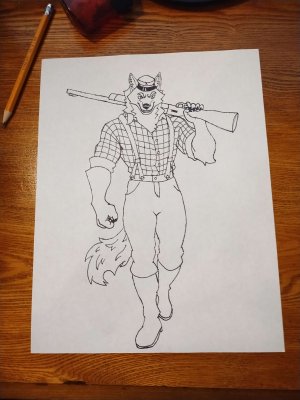
- First there's the riffle, which is basically a .308 lever action hunting riffle, it's a hunting riffle, which ties with the previous comment about "Coureur des Bois" but also just hunting in general, which more historically than modernly, as shaped the culture of North America, but more importantly Canada.

- The name of said riffle in-game thought should be something akin as "The Crooked Stovepipe", which is also the name of an old eastern canadian folk tune, but also could make allusion to the barrel of the gun since you know; crooked (old, like the reliable hunting riffle) stove (gets hot) pipe (metal tube, barrel), here's an accordeon rendition of that song that ties in the next point.
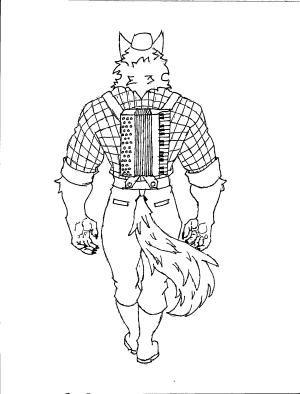
- The accordeon was added tie him to the "violoneux" (fiddler) archetype of the Quebec cultural landscape. True it is not a fiddle, but the accordeon is as much as used or important in folkloric french-canadian music. Also i just thought it was neat, and could make for an important part of the noise Moonshine makes when walking, making him distinct the same way for exemple Grey Talon is with bones/wood rustling when he walks or bebop sounding like machinery.
- Then to add to his tradionnal folk musician theme, the boots are important. I basically outfited him with parade military boots which are often outfite with metal plates under the sole to make more noise when tapping against pavement. Why would this be important would you ask, well see, in Quebec folk music, a core part of it is a concept called podorythmie (foot tapping). Basically, when performing music, the musician would sit on a chair an call the rythm of the piece with his feet while wearing tap dancing shoes/boots on wooden floors to add more beat/instruments to his often solo performance. As an addition, the metal plates could too be added to the noise Moonshine makes when walking to make it more distinct. Here's an exemple of podorythmie using an accodeon from Quebec folk songs.
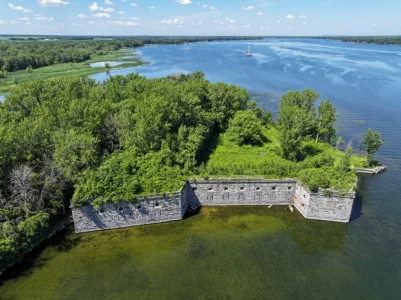
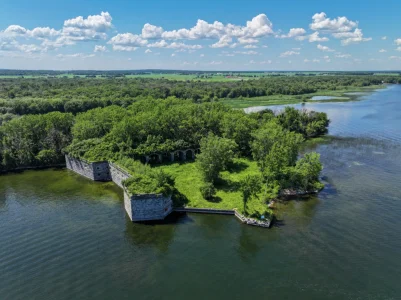
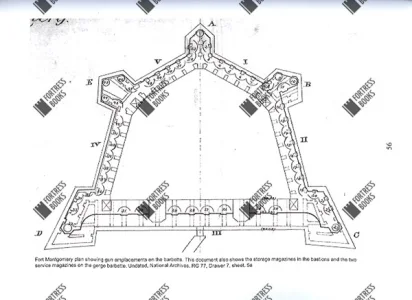
- Coming back to the boots, why military ones? well as you'll also notice, Moonshine also wears a civil war union foraging cap/kepi. Why would that be, isn't he Canadian? Yes, see here's the thing, he's a bootlegger who basically cross his product at the border, so i looked for some place where it would be logical for his group to have a base of operation and stumbled upon Fort Montgomery. It's a fort built by the US government for the war of 1812 inside Canada's territory by mistake, used to help defend against Canada and the British. It was last used during the civil war to spy on Canada and make sure they don't take the opportunity of a civil war to invade. It was then decomissioned because forts of that style became obsolete. It would then be sold at auction in the 1920's to people of a nearby town who used the stones to make a bridge. It's been mostly abandoned and overgrowned since. It's also worth noting that it is located on the shores of Lake Champlain, which connects to NYC by the Hudson River, and is also short of 1km next to the Canadian/American border.
Back to the cap and boots, it would simply be military surplus he's wearing because they were laying around in the fort, which was common practice to wear in North America back then as why buy a new coat when you can buy a discounted one from the army?
To finish the clothing before moving on to the rest. Flannel shirt because it's often associated to Canada, Quebec, lumberjacking, hunting, rural folks and werewolves, which are all things Moonshine is related to. Horse riding pants with suspenders, rural folk common attire and belts were less common at the begining of the 20th century.
My thought process of how their operation would work is the following :
- They would load barrels of Lake St-Jean water in trucks. The moon fragment still at the bottom of the Lake giving it its magical properties.
- They'd drive the trucks to the Canadian side of Lake Champlain and let the barrels float to the American side.
- They'd cross the border legally and collect the barrels in the lake, to then bring them to the fort.
- In the fort they would have installed a gigantic distillery and make moonshine with the barreled water to make it more appealing to sell than water.
- Once bottled, they would transport their product down the Hudson to NYC, and once there, with the help of the Tunnel Rats, would distribute the product to the docks for shipping.
And there you have it, a criminal distribution empire.
- Now some may be asking "Why are they not crossing the barrels dirrectly instead of letting them drift in the other Lake?" or "Why do they have to distil in the US and not in Canada dirrectly" which i'll explain here in multiple points because it's a lot of reasons and motivations at play the same time.
- First here the "benediction of lycanthropy". I tried to tie the backstory of Moonshine to the importance of the Catholic Church in Quebec's cultural landscape at the begining of the 20th century. Since the people victim of the flood were most likely catholics, i thought it would be fairly unrealistic that they would drop their religious beliefs which at that point were at the center of their lives. So i thought it would be logical that their perception of lycanthropy and werewolves moved from a curse to a benediction, since they helped save catholic lives. A miracle from god. This as some historical precedents in the "Thies of Kaltenbrun" were an old was accused of being a werewolf, argued he was once, but instead being sent by the devil he was sent by god, and at night would fight demons in hell, and was let go instead of executed.

en.wikipedia.org
- So now we have established that we have a people who considers lycanthropy a miracle. Something religious to be celebrated. The way i see it, they would always want to retain their werewolf forms then, to be better connected with the divine. So they would try to consume waters of Lake St-Jean often to keep their bodies that way, and would probably try to share it as far and wide to others who would be blessed to be werewolves.
- So why does it feel illegal then? Well first we'll have to analyse what i imagine the biology of the werewolves to be in Deadlock. Traditionaly, a werewolf grows a lot of fur, becomes bigger, stronger, faster, have an incredible healing factor and the shape of their bones has to basically change, snaps and reform into something completely else. In science, there's a very famous saying which is "nothing is created, nothing is destroyed, everything transforms". This implies that the act of transformation cannot create more muscle mass, bigger denser bones and upgrade the immune system out of thin air. This must require an incredible amount of energy.
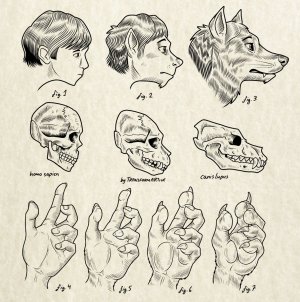
This comes back to the general werewolf myth. A creature so feral it attacks anyone it sees after it transformed. What if, being a werewolf requires you to consume 4 or 5 times the amount of calories you would require daily as a human? We've determined the transformation itself requires a ton of energy, so, what if, when transformed, a werewolf would be starving, the only thing they would be able to think about, is eating, anything to satisfy the gigantic hunger the transformation process left behind. Food, crops, livestock, pets, children and adults be damned, there is no reason until the hunger is satiated.
This in turn would explain why Moonshine and all the french-canadian werewolves aren't feral, they've been accustomed to eat a lot more all their lives. Since they also are constantly in the werewolf form, their bodies don't go through the traumatic experience of the transformation either, so they're never left starving. They have a succesful moonshining opperation to afford more food than the average humans. They come from a rural background, they produce some, most, if not all of their own food supply. They are well off.
- This would explain why the opperation would be illegal. I theorized that the Alchemy Bureau (mentioned by Infernus) would ban any drinks and spirits from Canada in fear of it being contaminated with "moon water". They'd fear random werewolves would be transforming themselves at will and attack random citizens. Which is kind of valid. The distribution is unchecked, illegal and maybe sometimes irregular, so there's no garantee people would have to transform often instead of being able to keep the werewolf form 24/7 like the french-canadians.
- Now as to why they're doing the whole "barrel drifting in the Lake bit" i thought it would be interesting to have them exploit a legal loophole in the law, where the ban is on transporting liquids through the border. They didn't technically, transport those barrels from Canada to the US, the water current did. And the barrel of water aren't a problem because they're transformed, so it's no longer a liquid form Canada. And it is distilled on US territory, so it's technically legal (although i doubt any reputable establishment would sell it). I think it makes room for a better dynamic with characters such as Haze or Holliday and also it explains why they can do they're activities without being shut down for so long.
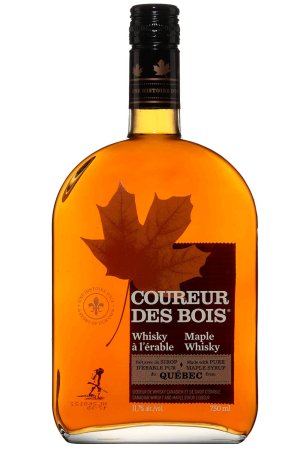
- Then as i think i said in the original post, some research made me realise Quebec was the only place in North America (with Mexico) to not have the prohibition. So moonshining and deals at the border are part of Quebec's cultural legacy and seems fitting for Deadlock's setting.
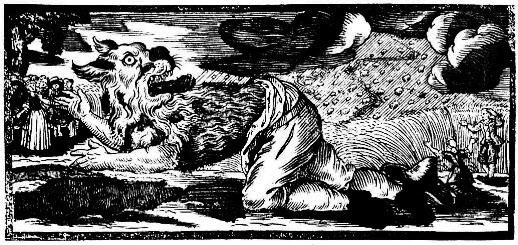
- And then like 50% of Quebec folk stories are about werewolves, so they seemed appropriate here. And also, in recent years werewolve archetypes are often associated to Canada, mostly because of the Marvel superhero, Wolverine.
- Moonshine seems like a very appropriate name for a werewolf as well, basically a pun, like half the roster has (Paige, Shiv, Billy, Bebop). Like moon -> werewolf...
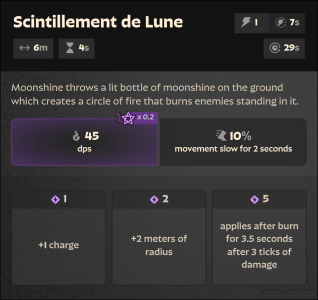
- Oh and "Scintillement de Lune", the name they gave to their product, is a literal french translation of "Shine of the Moon", which is a bit of a law 101 joke. Law 101 being the law that dictates every product must be labeled in french in Quebec.
And i think i did all i forgot to add, so yeah, looking forward for criticism on this


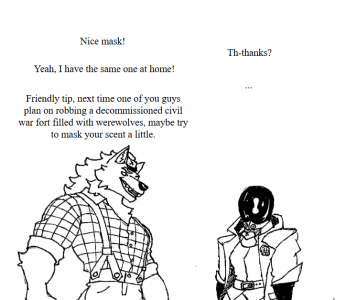
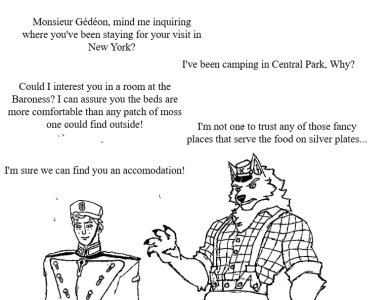
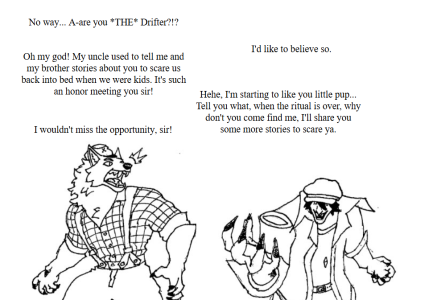
 Capture d’écran 2025-11-24 165700.png15.5 KB · Views: 10
 Capture d’écran 2025-11-24 165647.png16.1 KB · Views: 3
 Capture d’écran 2025-11-24 165640.png14.7 KB · Views: 2
 Capture d’écran 2025-11-24 165632.png17.8 KB · Views: 7
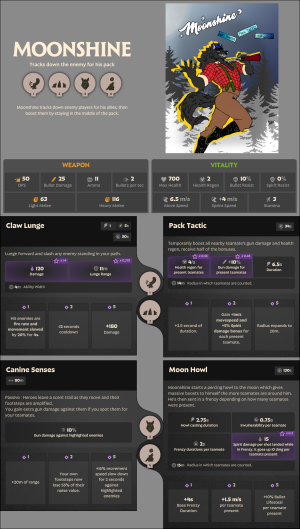
 Pack-Tactic-1764038579.png1.1 MB · Views: 7
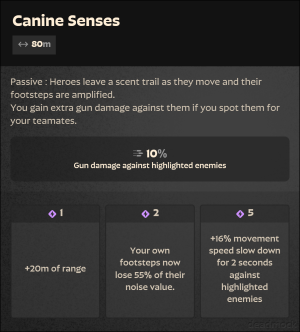 Canine-Senses-1764038602.png984.2 KB · Views: 8
 Pack-Tactic-1764038579.png1.1 MB · Views: 6
 Claw-Lunge-1764115765.png972.9 KB · Views: 7