triplewalau
New member
We all know that every Moba deserves a Wukong-variant, so allow myself to throw my hat into the ring:
Hanuman, specifically Hanuman as enshrined in the Balinese Kecak dance.
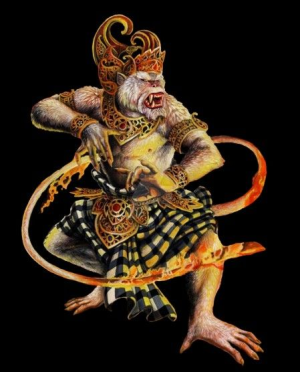
For context, the Kecak dance is a ritualistic dance passed down orally through generations in Bali, venerating the Hindu story of Ramayana, or the epic of Rama - one of the main characters being Hanuman, an emissary to Rama who helps lead him to eventually be victorious over the evil demon king Ravana.
The dance itself, funnily enough, is referenced in Wukong's ult in Dota 2 - you can hear the kecak chanting when you stand in the circle, so some of you may actually be more familiar with it then you think...
The occult mysticism of Bali, and largely the dukun shamanic tradition of Indonesia would fit naturally within the confines of the Cursed Apple, where purveyors of arcane arts are attracted to the Ritual from all corners of the globe.
Since Indonesian tradition may be an unfamiliar topic to most, I must preface that I was born and raised in Indonesia, and have personal ties to this culture. I find myself disappointed at the lack of representation of it, as it goes deep, and honestly, gets really really creepy the more we dive into it - all the more reason to inject the shamanic presence of the dukun deep into the Cursed Apple.
Well, first of all, what is a Dukun anyway?
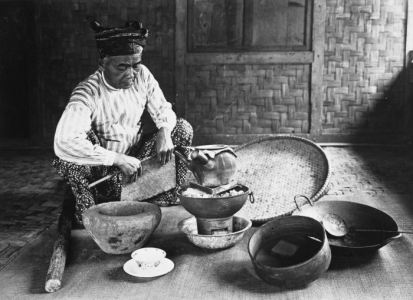 Dukun, in Indonesian, literally just translates to shaman - but the word itself carries many a connotation.
So a Dukun is basically just a shaman. What's new?
I think, as an Indonesian, just inciting the word gives me the heebie-jeebies. There are some things meant to remain untouched in this world, and that includes dark magics. I remember toying about the prospects of using magic, only for the air in the room to stifle. "You shouldn't talk about that stuff here" is what I learned.
All mentions of dark magic are to forbidden to be mentioned, let alone discussed - and I didn't even come from a village, I grew up in the city! And still we fear even the thought of dark magics being cast our way!
To hone in the point even more, Indonesia is mostly a majority Muslim country, with five official religions that you need to have written on your ID (Yes, really, BY LAW), but Dukuns fall right outside of this spectrum - and remain completely untouched to this day - for not even God knows the spirits they commune with.
We also have a special subsect of Dukun called the Pawang, shamans specifically contacted to for weather-related issues - People actually pay for their services, even today!
Other services include:
1. Summoning money out of a black box.
2. Cursing someone so they suffer eternal poverty and suffering.
3. Exorcisms
4. Summoning the rain
5. Prophetic visions of the future and divination
and more...
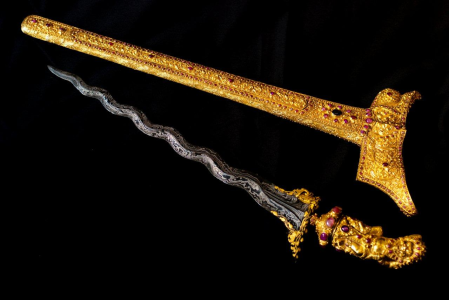
The "Keris", a traditional Indonesian dagger that is passed down through familial lines - often though to inhabit spirits. I actually had to equip one for a wedding myself!
Dukuns live outside... of the system.
They are linked to Indonesia's primal belief system, a form of animism called "Kepercayaan" - literally meaning "The Belief". It talks of inward leaning meditation primed by the tropical rainforests around, of which the thought gives me goosebumps. Imagine growing up in a remote village in Indonesia, safe, humid, warm in the daytime, only to transform into an ever-encompassing void of night as soon as the sun sets. The trees are tall, the jungle beckoning, and its inhabitants formed only by your imagination. This is why Indonesia is home to some of the creepiest cryptids and ghosts around, like the Pocong, Genduruwo, and Kuntilanak - all three of which Deadlock could see some mileage from!
But all of this... All of this for the Dukun is child's play - as they can peer into the veil and speak into the night, cursing those who seek to harm, and blessing those who seek to do good.
Well, how does this all relate to Hanuman?
Balinese Hinduism is Metal as F*CK
...is basically how I'd put it.
Let me just put up some images so you know how it looks:
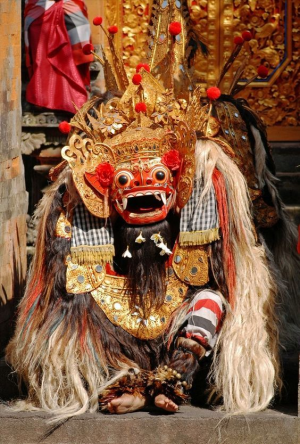
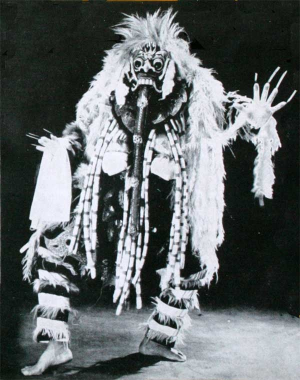
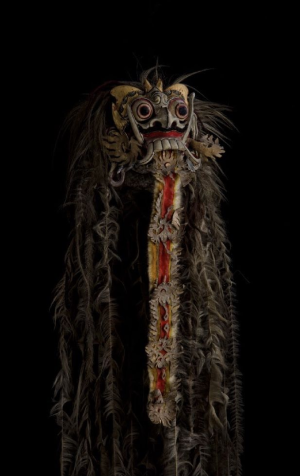
From left to right:
1. This is Barong. He's actually a good boy. He protects Bali from the evil of Ranga's witch army.
2. This is Rangda. She is supreme evil, the demon queen of the Leyaks.
3. This is a Leyak. It is a floating head. With entrails coming out of it.
Just aesthetically, Balinese deities are depicted with radical features, bulging eyes, tusks, fangs, claws, and more. There is a completely unique aesthetic to be found here, and literally no other game has ever done anything with this huge piece of culture.
But back to Hanuman...
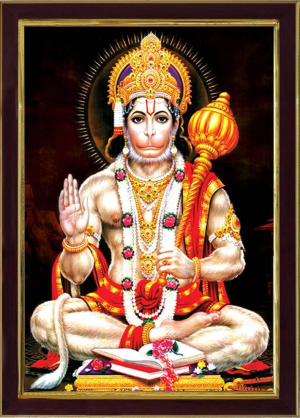
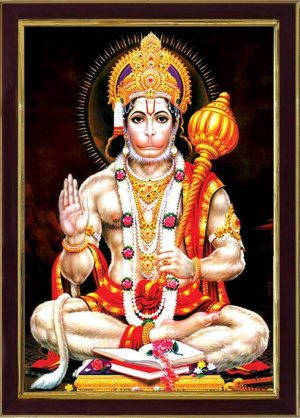
This is what he looks like in traditional Hinduism:
And this is what he looks like in Balinese Hinduism:
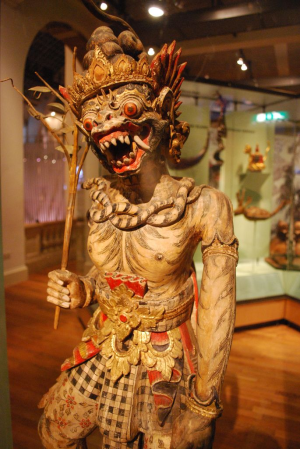
Just kidding. This is one of the more extreme depictions. He more often looks like this:
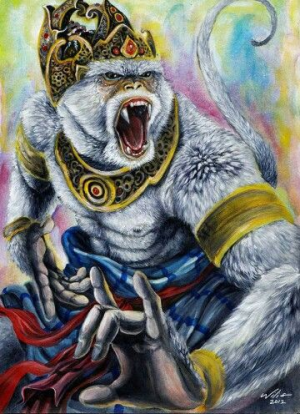
A white monkey decked out in Balinese regalia - a crown, bracelets, and a Balinese "kamen" cloth.
He is depicted as a symbol of strength, responsibility, and cheekiness - with a hint of unstoppability...
Sounds a lot like our Journey to the West friend, eh!
And thus - this is what makes the Balinese depiction of Hanuman a completely unique take on the Monkey King.
Where the Monkey King has his Jingu Bang, Hanuman has a mystic Keris by his side, and while Sun Wukong has his nimbus, Hanuman can slip into the shadows using the power of the occult and dark magics even the FEDERAL GOVERNMENT puts their hands off of.
Hanuman is Wukong but with a flair of shamanic tradition passed down through generations in Bali and its surrounding regions, and any sort of hero based on such a concept would be wholly unique in its ability to represent its culture.
Indonesia is a hotbed for dark magics, shamanic forces, and occult tradition, and it would be a waste if THE occult game of the century passed up on this opportunity, and I would love to see what you all think of such a potential character.
Even if nothing of the sort is gained from this post, I hope that it at least piques your interest about my culture. Sorry, no hero abilities or anything of the sort for you nerds... I'm not a gamedev, just an Indonesian.
P.S Any comments are welcome
Hanuman, specifically Hanuman as enshrined in the Balinese Kecak dance.
For context, the Kecak dance is a ritualistic dance passed down orally through generations in Bali, venerating the Hindu story of Ramayana, or the epic of Rama - one of the main characters being Hanuman, an emissary to Rama who helps lead him to eventually be victorious over the evil demon king Ravana.
The dance itself, funnily enough, is referenced in Wukong's ult in Dota 2 - you can hear the kecak chanting when you stand in the circle, so some of you may actually be more familiar with it then you think...
Example of a Kecak dance:
The occult mysticism of Bali, and largely the dukun shamanic tradition of Indonesia would fit naturally within the confines of the Cursed Apple, where purveyors of arcane arts are attracted to the Ritual from all corners of the globe.
Since Indonesian tradition may be an unfamiliar topic to most, I must preface that I was born and raised in Indonesia, and have personal ties to this culture. I find myself disappointed at the lack of representation of it, as it goes deep, and honestly, gets really really creepy the more we dive into it - all the more reason to inject the shamanic presence of the dukun deep into the Cursed Apple.
Well, first of all, what is a Dukun anyway?
Dukun, in Indonesian, literally just translates to shaman - but the word itself carries many a connotation."The dukun is the very epitome of the kejawen or kebatinan belief system indigenous to Java. Very strong and ancient beliefs of animism, ancestor worship and shamanism are held by the people of the Nusantara. While medical doctors and revivalist Islam and Christianity have caused a decrease in the prominence of dukun, they remain highly respected and somewhat feared figures in Indonesian society, even in the most orthodox Muslim-dominant areas. In the pre-colonial past, dukun were exempt from paying taxes, as with Hindu priests and Buddhist monks." - Wikipedia
So a Dukun is basically just a shaman. What's new?
I think, as an Indonesian, just inciting the word gives me the heebie-jeebies. There are some things meant to remain untouched in this world, and that includes dark magics. I remember toying about the prospects of using magic, only for the air in the room to stifle. "You shouldn't talk about that stuff here" is what I learned.
All mentions of dark magic are to forbidden to be mentioned, let alone discussed - and I didn't even come from a village, I grew up in the city! And still we fear even the thought of dark magics being cast our way!
To hone in the point even more, Indonesia is mostly a majority Muslim country, with five official religions that you need to have written on your ID (Yes, really, BY LAW), but Dukuns fall right outside of this spectrum - and remain completely untouched to this day - for not even God knows the spirits they commune with.
We also have a special subsect of Dukun called the Pawang, shamans specifically contacted to for weather-related issues - People actually pay for their services, even today!
Other services include:
1. Summoning money out of a black box.
2. Cursing someone so they suffer eternal poverty and suffering.
3. Exorcisms
4. Summoning the rain
5. Prophetic visions of the future and divination
and more...
The "Keris", a traditional Indonesian dagger that is passed down through familial lines - often though to inhabit spirits. I actually had to equip one for a wedding myself!
Dukuns live outside... of the system.
They are linked to Indonesia's primal belief system, a form of animism called "Kepercayaan" - literally meaning "The Belief". It talks of inward leaning meditation primed by the tropical rainforests around, of which the thought gives me goosebumps. Imagine growing up in a remote village in Indonesia, safe, humid, warm in the daytime, only to transform into an ever-encompassing void of night as soon as the sun sets. The trees are tall, the jungle beckoning, and its inhabitants formed only by your imagination. This is why Indonesia is home to some of the creepiest cryptids and ghosts around, like the Pocong, Genduruwo, and Kuntilanak - all three of which Deadlock could see some mileage from!
But all of this... All of this for the Dukun is child's play - as they can peer into the veil and speak into the night, cursing those who seek to harm, and blessing those who seek to do good.
Well, how does this all relate to Hanuman?
Balinese Hinduism is Metal as F*CK
...is basically how I'd put it.
Let me just put up some images so you know how it looks:
From left to right:
1. This is Barong. He's actually a good boy. He protects Bali from the evil of Ranga's witch army.
2. This is Rangda. She is supreme evil, the demon queen of the Leyaks.
3. This is a Leyak. It is a floating head. With entrails coming out of it.
Just aesthetically, Balinese deities are depicted with radical features, bulging eyes, tusks, fangs, claws, and more. There is a completely unique aesthetic to be found here, and literally no other game has ever done anything with this huge piece of culture.
But back to Hanuman...
This is what he looks like in traditional Hinduism:
And this is what he looks like in Balinese Hinduism:
Just kidding. This is one of the more extreme depictions. He more often looks like this:
A white monkey decked out in Balinese regalia - a crown, bracelets, and a Balinese "kamen" cloth.
He is depicted as a symbol of strength, responsibility, and cheekiness - with a hint of unstoppability...
Sounds a lot like our Journey to the West friend, eh!
And thus - this is what makes the Balinese depiction of Hanuman a completely unique take on the Monkey King.
Where the Monkey King has his Jingu Bang, Hanuman has a mystic Keris by his side, and while Sun Wukong has his nimbus, Hanuman can slip into the shadows using the power of the occult and dark magics even the FEDERAL GOVERNMENT puts their hands off of.
Hanuman is Wukong but with a flair of shamanic tradition passed down through generations in Bali and its surrounding regions, and any sort of hero based on such a concept would be wholly unique in its ability to represent its culture.
Indonesia is a hotbed for dark magics, shamanic forces, and occult tradition, and it would be a waste if THE occult game of the century passed up on this opportunity, and I would love to see what you all think of such a potential character.
Even if nothing of the sort is gained from this post, I hope that it at least piques your interest about my culture. Sorry, no hero abilities or anything of the sort for you nerds... I'm not a gamedev, just an Indonesian.
P.S Any comments are welcome